Publicado
6 June 2026
The New War on Gender: A Conversation with Judith Butler
Escrito por: Andrea Dip
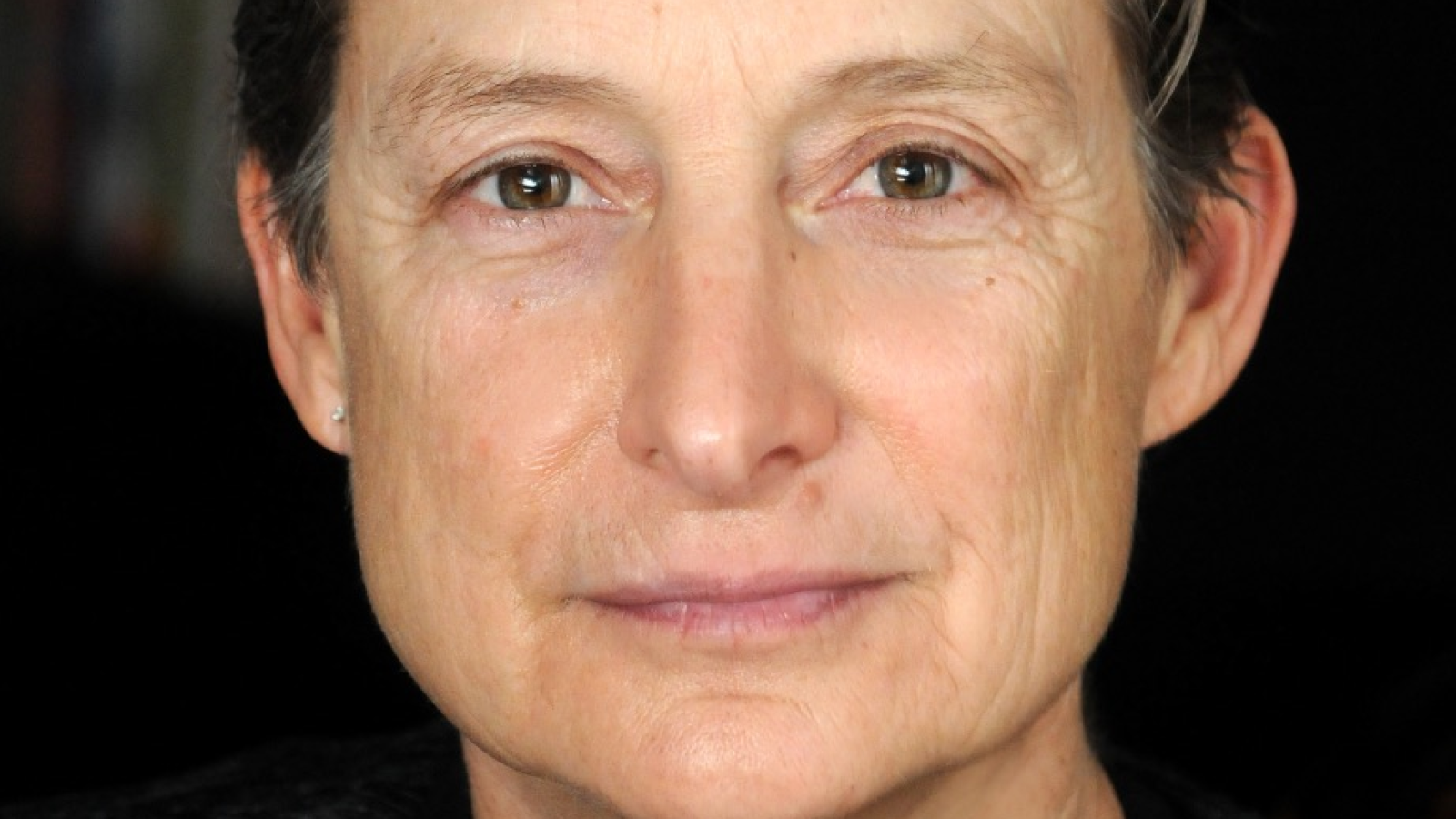
Judith Butler
Imagen de wikimedia commons, Licencia CC0 1.0

Judith Butler is a major contemporary thinker on gender, power, and politics. As a philosopher and professor at the University of California, Berkeley, Butler gained international recognition with their 1990 book Gender Trouble, which reshaped feminism, queer theory, and political philosophy by challenging traditional views of bodies, norms, and society. Their work has since inspired scholars and activists to question the idea of gender as natural destiny, reflecting instead on how it is constructed through law, language, violence, institutions, and everyday routines.
In Who’s Afraid of Gender?, her last book published in 2024, Butler examines why “gender” has become such a powerful focus for the far right. In this interview, they explain how the term has been used to bundle together various fears - about family change, feminism, LGBTQIA+ rights, migration, economic insecurity, and broader social transformation. Labeling all these anxieties as “gender” would allow conservative and authoritarian groups to create moral panic, rally support, and present themselves as protectors of order, nation, and tradition.
The conversation also moves through the digital world, where misogyny, transphobia and anti-feminism circulate with extraordinary speed. Butler reflects on the appeal of incel, redpill and manosphere communities among young men, not to excuse their violence, but to understand the false sense of power these spaces can offer. Memes, rumors and online attacks, they argue, do not simply express resentment: they organize it, connect it to racism, xenophobia and transphobia, and help build support for increasingly authoritarian politics.
Butler also speaks about the tensions inside feminism and the left, especially when trans lives and gender nonconformity are treated as secondary or negotiable issues. Against this, they defend a feminism capable of building coalitions against violence in all its forms - domestic, sexual, racial, economic, state and institutional.
In your book, “Who's Afraid of Gender?” you discuss how gender has become central to conservative and reactionary discourse. Ghosts used to create moral panic and gather popular support for fascist, authoritarian, and exclusionary political agendas. We've seen just how effective this has been with Trump, Milei, Bolsonaro, and now Kast in Chile - a man who until recently was president of the Political Network for Values, that is an ultraconservative organization whose core focus is precisely this. Why is this fear of gender not only still effective, but seems to be becoming increasingly so?
First of all, it's a term, gender, that now causes panic and fear in many people. They don't know gender studies, they haven't studied gender, but gender comes to stand for all the challenges to the traditional family that we can think of, including single parenting, gay and lesbian marriage, trans life, trans freedoms, travesties, gay, lesbian, bisexual, intersex rights. In human rights and European Union policies, in the inter American court, we see a reaction against that.
I've said it's about the family, the traditional family and feeling that that's being threatened. That's no small thing. Because many people feel that especially in this world, when they have debts to pay, and the climate is changing, and there's all this forced migration, and they don't know if they will be able to keep their job. There are many, many changes that are causing fear. But if we can narrow them down, and condense them into a single thing and call it gender, then all the panics you might have, which are diverse can be abbreviated, can be represented by this thing called gender.
But the other point that I would make is that the traditional family, by which I mean the heteronormative family - man, woman in marriage, reproducing and restricting sexuality to the conjugal marital pair, so monogamy within marriage, but also, in some cases, restricting sexuality to reproduction within marriage, depending on your religious background - they are following certain ideas of authority that may come from biblical sources, but also from the state. And when something called Christian nationalism takes hold, then the patriarchal law that comes down from a very literal reading of the Bible, or maybe an ideological reading of the Bible, converges with a state power that is also becoming increasingly autocratic, increasingly sovereign.
So that patriarchal authority in the state depends on the reproduction of the traditional heteronormative family and any challenges to the morality and politics of that heteronormative family threaten both state power and national identity, and also seem for many to challenge them at a deeply personal level, challenging them, their sense of their sex assignments, challenging their sense of sexuality, matters that should be settled internally and by law. So I think what we're seeing is a massive reaction against several challenges to patriarchal law, including, patriarchal capitalism, which organizes labor and profit, according to a sexual division of labor.
We are seeing these challenges from many progressive and left movements, most of them feminist, or embracing fundamental feminist aims of equality, freedom, justice, anti-violence, anti-war, mindful of the lives of squatters and debtors and the poor, committed to changing those conditions. Gender stands in for many social movements, I think, and also for the progress that many of us thought we had made, the anti -gender movement is fighting against our idea of progress.
Do you think that the digital technologies, which are overwhelmingly dominated by the tech bros, many of whom make explicitly misogynistic remarks all the time, exacerbate gender-related inequalities and prejudices? And what are your thoughts on the growing interest among teenage boys in ideas like Incel and Redpill?
Well, one question I have is: How powerless do those young boys feel in the rest of their world? And I say this not because I have compassion for misogynists, I don't. I think people who are misogynists should learn how to treat people with equality and learn how to treat women as dignified creatures in this world. So don't get me wrong. But I do think there's a false empowerment that happens on the web. And then when you see how effective the internet can be in circulating a meme, or creating a panic, like it can be quick, it can reach an enormous amount of people, that is a feeling of power. So they may not have power in the sense of property or retirement accounts or any of the things that the boomer generation had, but they're finding power through this manipulation of imagery and association through memes which do the very work of the gender phantasm. They condense a number of anxieties and fears into a single image, and then they launch that image, at which point people realize: Oh my God. I tell the story of Kamala Harris, who is running for U.S. president, black woman, progressive but centrist, not as left as we wanted her to be but still she was portrayed as if she was far left and as if she would bring migrants into the country and perform trans surgery on them so that meme or that rumor brought xenophobic anti -migrant hatred together with transphobia. So both anxieties could get intensified and they could also get linked together and once you do that linking and intensifying you have achieved something ideologically, you've instilled fear, you've incited reactionary hatred, you've also recruited support for a regime that it wants to be, and in many cases, succeeds in being increasingly authoritarian.
I mean, the incel world, these young men, do fault feminism, they have rancor and resentment against what they call feminism. We always have to ask, what is the idea of feminism that they are opposing? And is that feminism as we can document it, you know, historically? So feminism becomes a kind of sign or symbol for castration for them, a sense of diminished power, a sense that they are the ones now being discriminated against. And they often take the language from feminist discourse or they take the language from left discourse and they say: Oh, we're being dominated. We are being discriminated against on the basis of our sex. We are being exploited or fail to be recognized. So they use a lot of left language. And the anti-gender ideology movement also tends to, on the right, accuse gender policy, gender studies as colonial. You know, unfortunately, sometimes it is, but not in the sense that they mean it.
It seems like now they are creating a larger umbrella with the term wokeism, no?
Well, yes, and once you've established something called wokeism, which, we have to say, doesn't exist as a reality, it's a way of organizing a series of political and policy positions. So, for instance, the effort in public discourse and in education and in various institutions of life, not to use racist phrases, not to use racist discourse, which also means not to engage in racism, not to treat people who are of a different color than you in a less respectful manner, not to accept systemic inequality, a word they can't stand, the ways in which, as we can document, black and brown people, especially in the global north and in several areas in the global south, as we know, make less money, have fewer educational opportunities, are not given the same job opportunities or possibilities of enhancement. Now, to be opposed to racism is not just to go around saying, don't say that, don't say that, don't say that. Although sometimes we do have to stop people when they're saying racist things. It's like, hey, that's not good. You can't call another person by that name. That is degrading. Do you want to be somebody who degrades another person? Or do you want to accept the radical equality of all persons? If you want to accept the radical equality of all persons, then don't speak that way because that language degrades. Now, the minute we say that, or we stop someone from speaking or acting in a racist way, we are identified, let's say that we are anti -racist feminists, we're identified as the police. Suddenly, we are the police, and we're stopping people from expressing themselves. So we are against freedom of expression when actually what we're saying is that expression, how you express yourself, is part of the making and unmaking of equality. You are destroying equality in speaking certain ways. You can build equality by treating people with respect and offering recognition for the names and the nomenclature that they themselves use.
So the pronoun situation is, of course, one of the most controversial. But if someone says, call me they, call me he, call me she, please, what are they saying? They're saying, you know what? These are the terms by which I feel respected, I feel regarded, I feel like you understand what it means to respect me. And if somebody says, no, I'm not going to call you, by that pronoun, that pronoun is nonsense. What they're basically saying is, I choose to disrespect you rather than call you by the pronoun that you have asked me to use in order to respect you. And what that means is that I'm going to hold on to my traditional pronouns because that's more important to me than respecting you as a human being. All right, you can live that way. But that's an unjust way to live. That's a disrespectful way to live. And do we care about respect and justice? It seems, you know, there is a form of Christianity, there's a form of Judaism, there's a form of Islam and Buddhism and Hinduism, that all of which insist on respect, insist upon justice. So it's not that right -wing religious conservatives are holding, are representing religion or representing religion well, they are not. They are in many cases attacking values that are part of religious values, including care, including justice, including respect, including do not do harm.
Sonia Correa, feminist activist and researcher from Brazil, often says that the far right hates gender, but it's the left that's terrified of it. It's still very difficult sometimes for the left to discuss some issues. They are easily traded away during elections. Do you agree?
Sonia Correa is always right, as far as I'm concerned. It's very hard for me to find something to disagree with. She has taught me so much. I find her wise and just and life affirming as a human being. But let me say this. What do we mean by the left? I mean, there's a masculinist left. There's even a patriarchal left that assumes men will always be the leading powers on the left, that they will set the vision and the program. But there's also a left that has a Marxist perspective that never truly benefited from Marxist feminism, nor did it take seriously the feminist left of Ni una menos or Las tesis, both of which include sexual violence as something we must oppose and understand that the opposition to capitalism must be linked with an opposition to sexual violence, not just against women assigned female at birth, but all women, trans women, all people who are discriminated against on the basis of their gender non-conforming character, which means trans men as well, subject in some places to so-called violent conversion therapies, that these forms of violence and the violence against the indigenous, the violence against the poor, that all of these have to be part of an anti-capitalist movement, and we cannot agree to primary and secondary oppressions. And even for some leftist men who don't consider themselves masculinist, and who might be nice guys, they still hold to a conceptual framework in which what's primary is class oppression, what's secondary is gender and sexuality oppression. But of course, they're challenged by those who are anti-colonial and decolonial. They're challenged by those who have a feminist framework for the left, which is more encompassing than theirs. So if we look and see which left movements have been most exciting and powerful in the last years, we see it's the the feminist movement in the broad transfeminist sense that Ni Una Menos has made, not just in Argentina, but in several countries throughout the world, but also the ecological movements that have been so powerful in opposing corporate pollution and carbon emissions and fossil fuels. But we also see anti-war mobilizations that are taking form now, that are enormously important, that keep the focus on state violence.
So I think that the so-called left have to follow where these centers of energy are. What is appealing to people? Where are they moved? And so many people are now in debt. So many people are forced to move, to leave their countries. The levels of forced migration and homelessness are enormous. And they differentially affect women of all kinds. And perhaps we need another starting point. Where Marxism can stay, as a framework. But it's not the only framework, it has to actually allow its framework to become multiple, and also to become sensitive to the geopolitical situation from which it emerges. Not all Marxisms can be the same. It's not a universal science. It's a radical practice and theory that looks differently depending on who's articulating it for what purposes and in what parts of the world.
Recently we had an episode in Brazil with the election of Congresswoman Erika Hilton as a chair of the Chambers of Deputies Committee on the Defense of Women's Rights. She's a trans woman and we have witnessed the violence of the TERFs. I myself am being targeted by these people as well…
You're in good company. It's a badge of courage.
Yes. I'm very proud of it. Their rhetoric is very similar to that of ultraconservatives and the far right. So, how should we address this within our feminist movements? Is there any kind of dialogue possible with these persons?
I think it's very hard because I've tried to have those conversations and they have not worked well. Occasionally TERFs will come and listen to me or try to talk to me. And I understand that they have a lot of anger and that they also increasingly adhere to a certain biological essentialism. I think we need to go back, maybe do some public pedagogy. Like why feminists agreed that biology is not destiny? Why is it that we agreed to that? What was so important about that phrase, that formulation? It hurt us to say that, oh, you can reproduce, therefore you must reproduce, therefore that is your task in life. No, we said no to that, and some of us couldn't reproduce anyway. We were assumed to be able to reproduce, and others could, and they didn't want to do that, or maybe they adopted, or maybe they didn't have children at all, whatever. We fought for those freedoms. We fought to distinguish between the idea of a biological destiny and who we become in life. That doesn't mean we denied biology. No, no. Biology is complex, important. We need good healthcare depending on our biology. Biology is in a dynamic relationship with culture and the environment. We need the field of biology. What we don't need is biological determinism. But maybe the stronger argument is simply this. You ask any woman, have you had the experience of walking down the street at night with fear that you will be harassed or raped or murdered? They will say, yes, I've had that fear unless they live in very protected classes where they don't walk down the street at night or they're always surrounded. But many, many, many women will feel that. Many feminists will feel that. We took to the streets. We took back the night because we did not want to walk on the streets with fear. Now, if you ask the question, should anybody who is a minority or who is socially vulnerable or who is exposed to violent prejudice and hatred, should anybody walk down the street at night with fear? And if your answer is no, nobody should, then you believe that it's not just you who should be able to do that, but that trans women and trans men, non -conforming people, non -binary people, they should all be able to walk down the street. People who are subject to racist violence, they also should be able to walk down the street, right? So then we have like the beginning of a coalition where like, oh, guess what? All of us need to be able to walk down the street. Let's take to the streets. together. Let's all of us be in coalition against ordinary violence, non -state violence, domestic violence, state violence, symbolic violence, and prison violence. Right? I mean, if you think people shouldn't be subject to violence in prison, not a cis woman, not a trans woman, I mean, you're not going to say, oh, cis women should not be subject to violence by guards who are the most violent group in prison against women. If you think that, then you also, are you going to say it's OK if trans women are subject to that, especially if your politics says that they should go live in a barracks with men? What kind of violent situation are you putting them in? Do you think anyone should be in that violent situation? You just said, no, I should not. We should not. But you can't then come up with a policy that mandates that others who are equally vulnerable, if not more so, be put in that violent situation. We need large public debates where we take these issues one by one very slowly. You don't have to have a PhD in any field. You just have to care about human beings and want to think in a way that feels consistent and just and fair.
You say that we have two tasks to understand the place of gender in the post-fascist cause, but also to be able to imagine and envision a livable, breathable, equalitarian and interdependent world. How do we do that?
We are doing it in our solidarities. Our solidarities are ways of caring for each other: We cook for each other. We make sure somebody has enough sleep. We go with somebody to the lawyer's office or to the hospital, or we find modes of companionship and cohabitation that we believe in, sometimes in our smaller communities, but sometimes they take transnational form. Sometimes it's with strangers that we're in alliance. I mean, there are many alliances with people in Gaza right now. There are many alliances with people in southern Lebanon right now. And even with the Iranian people, especially those who've been tortured by their regime. How do we keep those alliances alive? Those alliances are all in smaller forms, potentials for a transnational movement. So I think our ideals, our imagination… It's not something we have to do in the future. It's already with us. We're already imagining that better world when we act in that way. We have that ideal. We're embodying it. We just need to find our own digital presence and our own digital powers. Not to say that all powers are digital, but we would be foolish if we didn't have them.
The interview was originally published in Portuguese on the Pauta Pública podcast, produced by Agência Pública de Jornalismo Investigativo.