Publicado
8 July 2026
Germany: No longer safe – attacks on pride events as physical manifestations of anti-queer backlash
Escrito por: AK Feministische Intervention
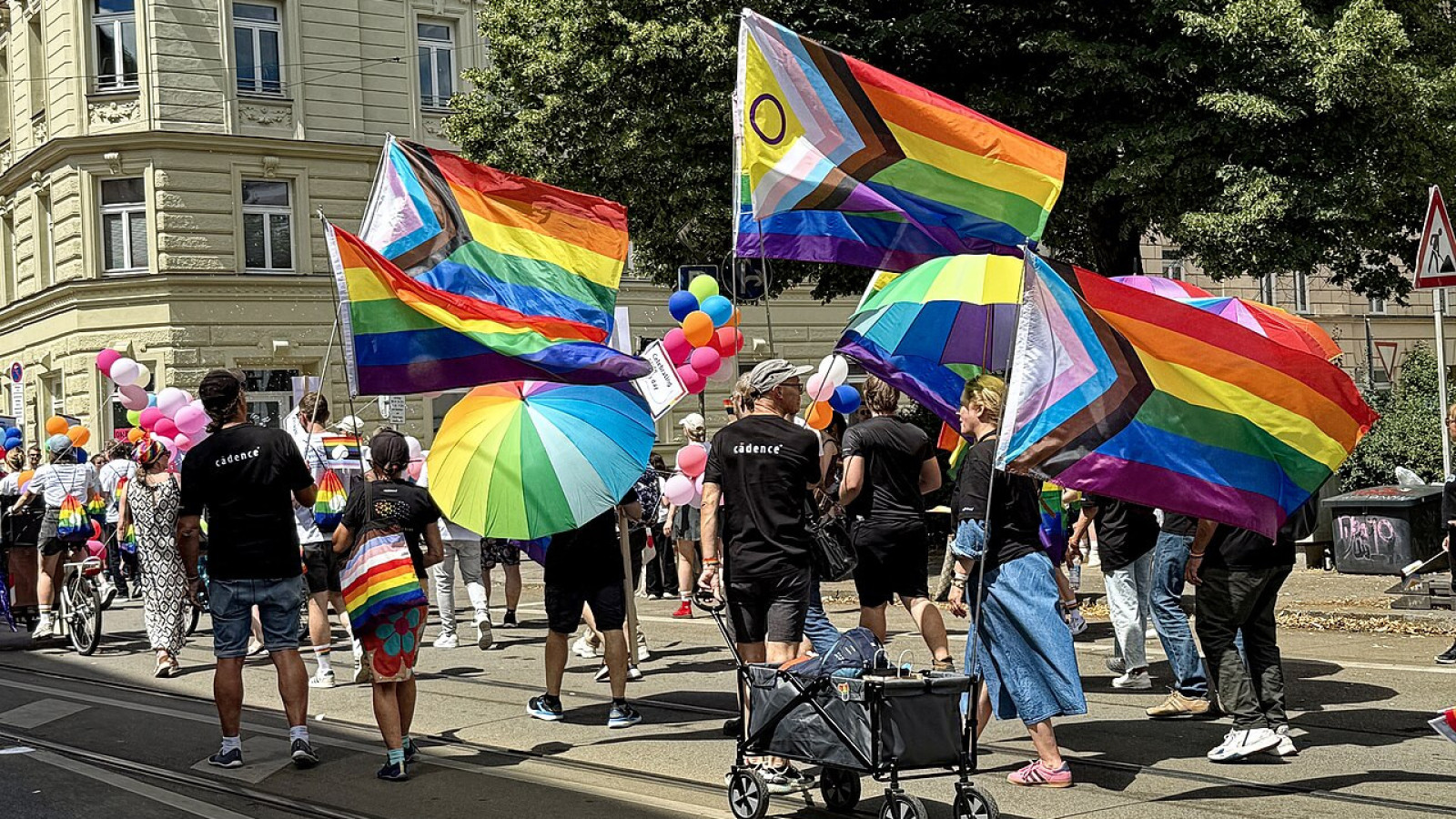
CSD parade 2025 in Munich
Imagen de Burkhard Mücke, wikimedia.org, Licencia CC BY-SA 4.0

In the past three years, Germany has seen a surge in attacks on pride parades, neo-Nazi manifestations labelled as counter-protests and anti-queer harassment aimed at organizers and participants. Combined with a general rise in anti-queer attitudes, dwindling support for queer rights from the federal government and local authorities, LGBTIQ+ communities find themselves under increasing pressure. And they are fighting back: with new pride events popping up in every other village, a rising re-politization of pride parades and queers taking safety measures into their own hands.
The legal situation for queers in Germany is comparatively good. After the formal decriminalization of homosexuality in 1994, many rights have been won. In 2001, the country established the civil partnership for gay couples, actual marriage equality followed in 2017. The discriminatory “transsexual act” was ruled unconstitutional in 2011 and the paragraphdemanding that transgender people needed to get sterilized in order to change their name and legal gender status was dropped. In 2024, Germany finally passed the so-called self-determination law, making it easier to change one’s name and gender marker. But the latter came with a toxic transphobic debate, fear mongering about bathroom policies and puberty blockers for minors (which was at no point a subject of this law). The conservative Christian Democratic Union (CDU) played a huge part in this dynamic.
Anti-queer hatred is alive and well in Germany
Legal progress and the growing visibility of queer communities have not been welcomed by everyone. Anti-queer crimes are at an all-time high, and acceptance rates in parts of the population are dropping: a survey conducted by the Federal State of Saxony in 2023 shows that 30% of its inhabitants agree with the statement that homosexuality is “unnatural” – a rise of 7% within only two years.
Pride events have been held in (West) Germany since 1979 and for a long time, they have been considered safe, celebratory events and also have been criticized for their de-politization and commercialization. In the summer of 2024, pride season was hit with a bitter reminder that anti-queer hatred is alive and well: a mob of more than 700 neo-Nazis assembled at the pride parade in the mid-sized Saxonian town of Bautzen. This was not the first incident in the 2024 pride season: nine other pride events had already been confronted with far-right mobilizations, and it was neither the first year prides have been under attack. But the huge mobilization success for the far-right in Bautzen set the tone for the rest of the season. 32 of the 200 Christopher Street Day (CSD) events have been met with anti-queer right-wing rallies, 68 have been accompanied by disruptions and attacks targeting participants and infrastructure.
Table: Proportion of far-right gatherings and disturbances during the CSDs and CSDs with no documented incidents, by federal state
Brown: Far-right gathering during the CSD
Dark brown: Far-right gathering and disturbances during the CSD
Light brown: Disturbances before or during the CSD
Green: CSD with no documented incidents
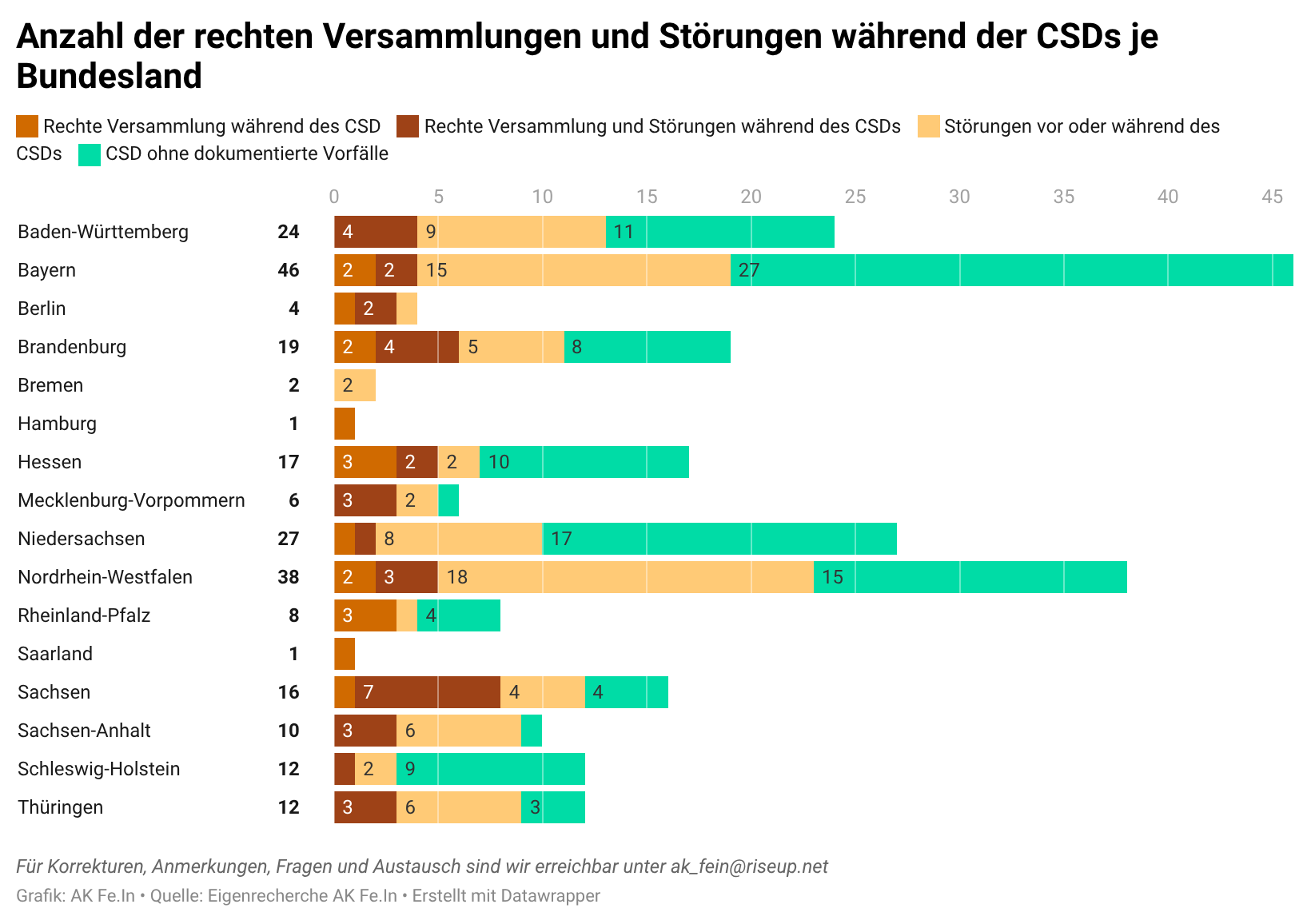
Fewer than half of the demonstrations took place without disruption
Sadly, this trend has continued in 2025. Only 110 of 243 CSDs and Pride events took place without documented incidents—that is, without any event-related (far-right) demonstrations or rallies and without any reported attacks, insults, or threats. This represents significantly less than half (45.2 percent). At 17 CSDs, there were right-wing gatherings but no disruptions (7.00 percent); at 35 CSDs, there were right-wing gatherings and disruptions (14.40 percent); and at 81, there were “only” disruptions but no right-wing demonstrations (33.33 percent). While the mobilization success of Bautzen has not been matched in numbers (only ten far-right demonstrations managed to mobilize around or more than 100 participants), spread out over the season and in decentralized events, several thousand neo-Nazis once again took to the streets.
There are regional differences in terms of which type of right-wing organization takes centre stage and there is a link between the turn-out at anti-Pride mobilizations and strong, firmly established local neo-Nazi structures. And while larger cities like Berlin are also seeing anti-CSD manifestations, the ratio of pride participants and neo-Nazis is far more likely to turn into a dangerous imbalance in smaller towns and villages.
The registered rallies are by far not the only concern: hostile bystanders, local residents throwing eggs or shouting anti-queer slogans, groups of right-wing teenagers threatening queers on their way home from pride events, Christian fundamentalists praying for “lost souls” on the sidewalks during parades, arson attacks on queer NGOs in the days leading up to pride – all this has created an atmosphere where participants no longer feel safe at pride. The celebratory vibe is gone.
And while queer communities are under attack, the federal government has shown a staggering lack of support, with chancellor Friedrich Merz stirring anti-queer sentiments. In some places, local authorities have burdened pride organizers with near-impossible security requirements, in other places the police have shown little to no effort to ensure the protection of the parade in the face of neo-Nazi threats.
Queers and antifascists sharing tools and knowledge
Queer communities, however, have not been demoralized by this. In 2026, there will be more pride parades in Germany than ever before. The communities have learned from the events in the 2024 pride season and formed stronger ties within their regions and beyond. Antifascist initiatives have come up with support strategies and put them into practice. 2025 has proven that these are most effective when they are developed in dialogue with local pride organizers and tailored to their specific needs and requests. Now, queers and antifascists organize trainings for community-based approaches to safety; community members learn how to act as a group when physically attacked, how to fend off right-wing youtubers or how to minimize risks on train rides to pride events in other cities. Workshops teach pride organizers how to draft security concepts that do not rely on the mercy of the police, often emphasizing non-violent measures like alert-systems, tools for fast communication and decision-making, evacuation plans and defence strategies. Initiatives from bigger cities regularly mobilize to CSDs in more rural areas, knowing there is safety in numbers and making sure nobody has to travel alone. Pride organizers from different regions share their skills and support each other.
In 2025, organizers of different pride events across East Germany got together in Berlin, talking about their experiences in dealing with threats or unsupportive local authorities, exchanging best practices and tools, sharing useful contacts and ideas for funding. In the end, they formed a network and published a joint statement. “Together” they write, “we are committed to ensuring that queer life is visible and safe everywhere in Germany.” And: “We won't be intimidated, we won't be driven away, and we certainly won't hide!”.
Queer communities might be under intense pressure – but they are showing an incredible amount of resilience.
About the authors: AK Feministische Intervention is a collective focusing on the intersections of antifascism and feminism. In 2024, they started monitoring anti-pride mobilizations across Germany, adding more members to allow a more detailed analysis of the events in different federal states in 2025. Their reports can be found here (all in German).
Joint statement of pride organizers across East Germany (in German)