Publicado
7 June 2025
Trump and his simple double game
Escrito por: Andreas Bohne
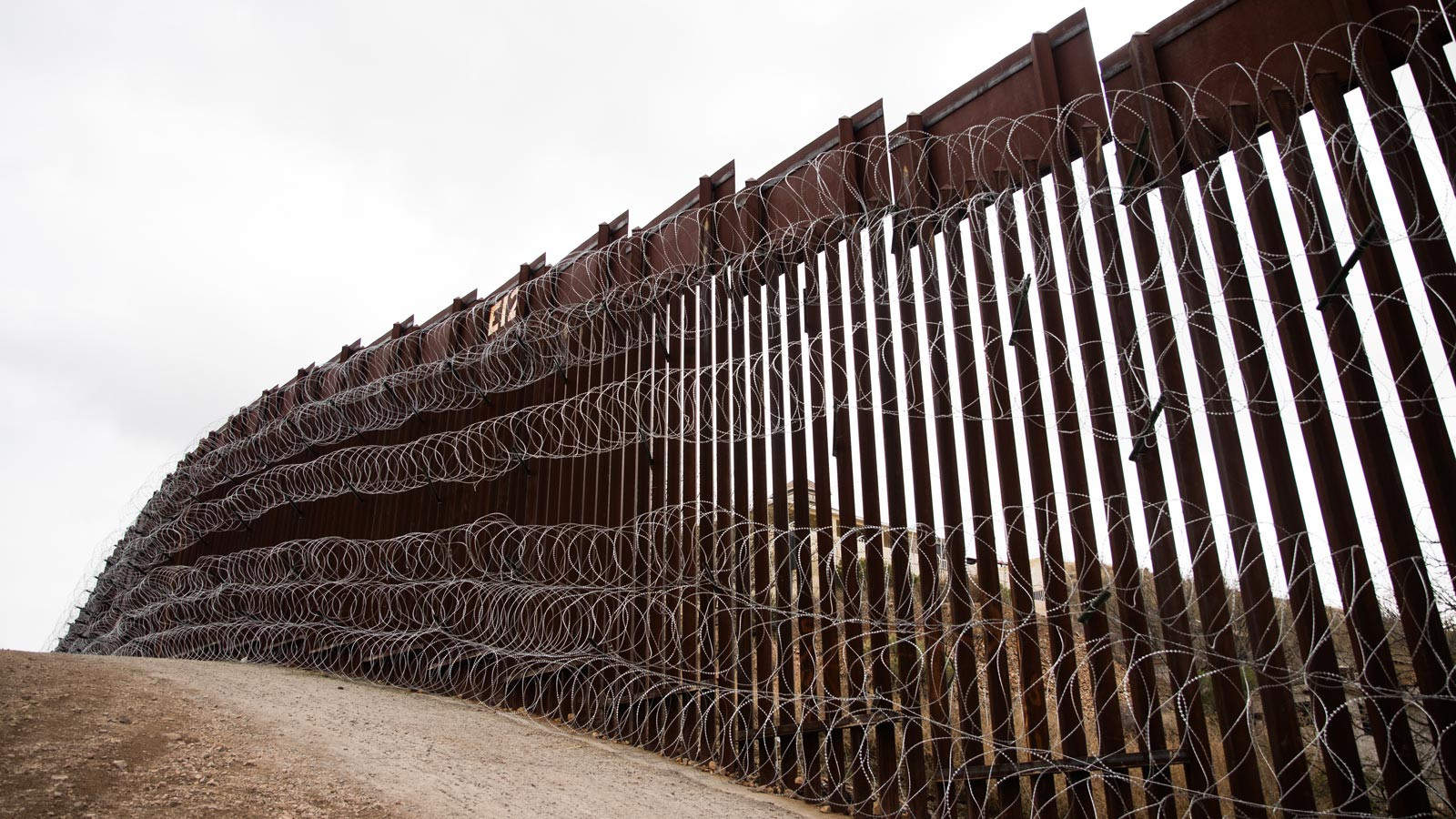
Layers of Concertina are added to existing barrier infrastructure along the U.S. - Mexico border near Nogales, AZ, February 4, 2019.
Imagen de Robert Bushell, rawpixel.com, Licencia CC0 1.0
Not exclusively, but primarily in migration policy, Donald Trump repeatedly shows his true colours. And what appears contradictory results in a consistent racist image. Take Africa, for example.
Right-wing actors repeatedly promote the ‘Rwanda model’, either as a synonym for the deportation of people to third countries or the specific transfer of individuals to the East African country ruled autocratically by President Paul Kagame. In early May, Rwandan Foreign Minister Olivier Nduhungirehe confirmed on the state television channel Rwanda TV that Rwanda is in the early stages of talks about accepting immigrants deported from the United States. This was triggered by the deportation in mid-April of Iraqi refugee Omar Abdulsattar Ameen, who was granted refugee status in the United States in 2014. Following Iraqi allegations and accusations that he had murdered a police officer as a member of IS, he was deported despite legal concerns and unclear evidence.
Even before news agencies such as Reuters reported on it, the portal ‘The Handbasket’ reported on a telegram sent on 13 March by the American Embassy in Kigali stating that the East African country had agreed to accept deportees from the United States who cannot be returned to their country of origin for fear of persecution. However, it remains unclear what legal procedures made this possible. The amount mentioned is $100,000 per person to support social services, residence documents and work permits. According to reports, Rwanda has agreed to accept ten more so-called ‘third-country nationals’ (TCNs) of various nationalities. In addition to Rwanda, crisis-ridden South Sudan is also slipping into Trump's sphere of interest. A group of eight migrants, including people from Mexico and Vietnam, are stranded in Djibouti, East Africa, awaiting deportation to South Sudan, as Trump confirmed in a social media post on 22 May.
Acceptance of white ‘refugees’
While some people are being deported, white ‘refugees’ – the official term – are being welcomed. Amid much media coverage, 59 white South Africans arrived on 12 May 2025, greeted by US officials. The ‘admission’ is just one piece of the puzzle in the recent disputes between the US and South Africa. In February, Trump ordered in his ‘Addressing Egregious Actions of the Republic of South Africa’ that all US foreign aid to South Africa be stopped and that his government 'shall promote the resettlement of Afrikaner refugees escaping government-sponsored race-based discrimination, including racially discriminatory property confiscation’ in South Africa.
'White genocide' as an inherent accusation
Trump accused the South African government of confiscating ‘agricultural property belonging to ethnic minorities in Africa without compensation’ under the recently passed Expropriation Act 13 of 2024 (Act). The inherent accusation of ‘white genocide,’ which was not yet explicitly stated here but nevertheless resonated, was raised even more clearly at the meeting between Cyril Ramaphosa and Donald Trump in May, which received widespread media coverage. The latter presented a video featuring chants of ‘Kill the Boer’ and a photo taken from a Reuters video from the Democratic Republic of Congo.
The fact that there is simply no evidence of a higher murder rate among white farm owners (among other things, the South African Daily Maverick shows here that five out of six fatalities in farm attacks are black) is irrelevant. However, they illustrate how the dictum of ‘white genocide’ in South Africa, as repeatedly espoused for years by the AfD, among others (e.g. here by MEP Tomasz Froelich), is catching on. The Daily Maverick explains that at the time, no one had said anything about their motives and what the Trump administration had classified as ‘refugee status’. However, as they are representatives of the white middle class, they hardly meet the UN definition of refugees.
Redacción: Ulli Jentsch